FuturistU > Culture > Reimagining Work Culture > Module 1 / 5

Intro to Reimagining Work Culture

Instructor: Jaime Neely
In this course, Trend Hunter's Cheif Culture Officer, Jaime Neely, dives into the future of work that has seemingly already arrived, thanks to the global pandemic. While many organizations swiftly shifted and adapted to working from home, others struggled to navigate and manage a virtual working environment.

What will the workplace look like when we emerge from this global crisis? Re-imagining Work Culture examines how the workplace has forever changed, and what employers must do to meet the needs of their current and future employees. This course leverages Trend Hunter's ever-relevant framework on the 4 Es of Modern Work Culture to understand how you can build a resilient and agile workforce.

Get the 2024 Trend Report FREE

Insights by Trend Hunter AI

Escalation Logic
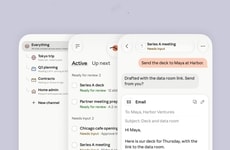
Brands add AI front desks that sort needs before people intervene

What's Happening - AI assistants are increasingly handling intake, triage, and follow-up tasks, helping services stay responsive between staffed interactions. Rather than replacing employees, they are taking on repetitive coordination work and preserving context across handoffs. This allows staff to focus more attention on complex cases, sensitive conversations, and decisions that require human judgment.

Workshop Question - How could your brand use AI to shorten intake and routing without making customers repeat themselves later?
5.3
Score
Popularity
Activity
Freshness
Patterns
Megatrends
Permission Layers
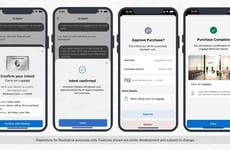
Companies package machine action inside visible rules and approvals

What's Happening - AI platforms are shifting from simple task completion to ongoing action that runs within preset access rights, approval paths, and communication policies. Brands are adding permission checks, policy logic, and escalation steps directly into the systems that send messages, assess risk, or move work forward. This points to a more controlled form of delegation in which AI can handle repetitive operational steps while sensitive moments still require explicit sign-off.

Workshop Question - How could your brand let automation act on a customer's behalf while making its limits easy to see and change?
6.7
Score
Popularity
Activity
Freshness
Patterns
Megatrends
Protocol Delegation
Health systems let software carry out next-step care tasks

What's Happening - Healthcare organizations are using software that can initiate follow-ups, outreach, and other routine next steps inside predefined care pathways. The shift makes these tools look less like assistants and more like operational extensions of the care team, allowing more work to get done without compromising patient care.

The pattern reaches beyond bedside tasks into back-office judgment work — that broadening scope suggests organizations are testing where governed autonomy can reduce administrative drag as well as care gaps.

Workshop Question - How could your brand turn repeatable support tasks into a governed service that happens between customer touchpoints?
5.8
Score
Popularity
Activity
Freshness
Patterns
Megatrends
Delegated Interfaces
Brands are embedding AI that can act across tasks continuously

What's Happening - Digital products are evolving from prompt-based tools into systems that can interpret context, recommend next steps, and complete actions on behalf of users. As AI assistants become more embedded in consumer and workplace environments, brands are packaging autonomy in more approachable forms while adding safeguards that keep people involved when decisions carry greater risk. The result is a shift from answering questions to actively reducing friction across everyday tasks.

Workshop Question - How could your brand turn a high-friction customer task into a delegated workflow rather than a self-service journey?
6.7
Score
Popularity
Activity
Freshness
Patterns
Megatrends
Autonomy Stacks
AI tools are combining memory, action, and lower-cost execution

What's Happening - AI coding tools are moving beyond conversational interaction into execution through software touchpoints. These tools are increasingly designed to write, test, and refine code on a user's behalf, while aiming to lower costs and reduce manual switching between planning and implementation. As artificial intelligence systems are capable of handling longer inputs and maintaining more working context, their role in workplaces shifts from single-turn assistants toward more persistent software operators.

Workshop Question - How could your brand turn repetitive multi-step tasks into experiences users can delegate with confidence?
6.7
Score
Popularity
Activity
Freshness
Patterns
Megatrends
Remote Community
New Platforms Help Remote Workers Find Community Workplaces for Socialization
Trend - Platforms are emerging that map local work‑friendly locations, show real‑time seating or noise levels, highlight amenities and offer curated lists of cafés, libraries and coworking spaces. These tools position community‑based work as a flexible alternative to home offices and corporate spaces.
Workshop Question - How might we create solutions that enhance social connection and reliable working conditions for remote workers seeking community-oriented environments?
5.9
Score
Popularity
Activity
Freshness
Patterns
Megatrends
Body Doubling
Consumers increasingly rely on collaborative apps and games to boost productivity
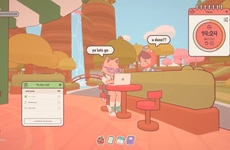
Trend - Developers are using apps and media to recreate the social conditions of working alongside others—but without requiring shared tasks or conversation. By simulating the presence of others, these platforms embrace soft accountability, allowing consumers to anchor their attention and reduce distractions.
Workshop Question - How can your brand demonstrate a consideration for neurodivergence in the product development stage?
5.3
Score
Popularity
Activity
Freshness
Patterns
Megatrends
Integrated AI
Workplaces are embracing non-exploitative, seamless AI services
Trend - Organizations deploy AI tools embedded within existing software, using contextual suggestions, low-code integrations, and privacy-first designs. These platforms aid tasks like scheduling, document drafting, and analytics without introducing new interfaces or replacing roles.
Workshop Question - How can we integrate AI into our existing processes in a way that builds trust, respects autonomy, and enhances efficiency without replacing current roles?
4.4
Score
Popularity
Activity
Freshness
Patterns
Megatrends
Earbud Productivity
Tech brands launch productivity-focused, distraction-reducing earbuds
Trend - Tech companies are introducing earbuds with on-device AI that sense user context, adapt noise cancellation to filter distractions, surface urgent ambient sounds, and deliver personalized productivity prompts. Integration with calendars and apps schedules focus sessions and dynamic soundscapes.
Workshop Question - How might we incorporate AI-driven personalization and context awareness into our products to enhance user productivity and focus in dynamic environments?
6.1
Score
Popularity
Activity
Freshness
Patterns
Megatrends
Productivity-Focused AI Earbuds
viaim Introduces a New Category of Wearable Technology at IFA 2025
viaim's new AI earbuds — dubbed OpenNote Earbuds — are designed to function as a lifestyle productivity tool rather than solely an audio device. These open-ear earbuds utilize a titanium and... MORE
AI-Powered Productivity Tools
Laxis Aims to Streamline Workflows and Redefine Collaboration
Laxis has introduced a suite of AI-powered productivity tools at CES 2025. The centerpiece of the brand’s offerings is an ecosystem that integrates advanced AI software with intuitive hardware... MORE
Wooden AI Translation Earbuds
The 'PIN' Wooden Earbuds Come in Three Finish Options
The 'PIN' wooden earbuds are a feature-rich tech accessory created with impressive everyday productivity in mind to help users perform more tasks in a handsfree manner. The earbuds are crafted with... MORE
play_circle_filledAI-Backed Personal Assistive Earbuds
AI-Backed Personal Assistive Earbuds
A Team of Designers Create the Personal OSO AI Earbuds
A team of designers comprised of Sen Cai, Bill Wang, Max Huang, and Eric Xiao create the OSO AI Earbuds. These are a pair of earbuds that also function as a personal AI assistant. It leverages the... MORE
Working Parent-Focused Management Tols
VIAIM and NoteKit Offer a Solution for Working Parents
VIAIM's RecDot earbuds and NoteKit software present an innovative solution for working parents struggling to balance professional demands with family responsibilities. The system combines adaptive... MORE
Home AI
AI is being used in various smart home applications to enhance private security
Trend - AI-driven cameras and sensors analyze video and audio, detect anomalies, and authenticate faces and voices in real time. Edge-based learning reduces false alarms, while automated alerts, access controls, and predictive threat scoring augment home security with adaptive, autonomous protection.

Workshop Question - How might we leverage AI to create seamless and proactive solutions that adapt to user lifestyles and enhance everyday security and convenience for our brand?
5.8
Score
Popularity
Activity
Freshness
Patterns
Megatrends